
Somewhere right now, a patient is noticing blood in their urine, wondering whether to call a clinic, worrying about cost, timing, transportation, and what happens if the answer is something serious. That is the real-world backdrop for new bladder cancer research like this. Not the lab bench, not the graph, but the person stuck between symptoms and answers. This new study describes a urine test built around a self-assembled DNA “nanoladder,” which sounds a little like something a very tiny handyman would carry to work, but the underlying idea is serious: make early bladder cancer detection faster, more sensitive, and less invasive.
Why bladder cancer detection needs better tools
Bladder cancer is one of those diseases where earlier detection can make a very big difference. The challenge is that the current path to diagnosis is not exactly a spa day. Patients may need cystoscopy, imaging, and follow-up testing. Cystoscopy can be effective, but it is invasive, resource-intensive, and not equally easy to access for everyone. For people in rural areas, uninsured patients, hourly workers who cannot afford time off, and communities already carrying a heavier cancer burden, each extra step can become a barrier.
That is why urine-based biomarker testing is so appealing. A urine sample is easier to collect, easier to repeat, and far more realistic for broader screening or monitoring. The catch is that the molecules researchers want to detect in urine are often present in extremely small amounts. In other words, the signal can be whisper-quiet while the stakes are loud.
This study focuses on one of those biomarkers: miR-126, a microRNA associated with bladder tumors. MicroRNAs are tiny bits of genetic material that help regulate gene activity. They are useful as biomarkers because disease processes can change their levels. They are also tricky to measure because they are small, sparse, and not inclined to wave their arms for attention.
What the “DNA nanoladder” actually does
The research team designed an electrochemical biosensor that can detect miR-126 in urine in under 30 minutes. That speed alone gets attention. But the more interesting part is how the system amplifies the signal.
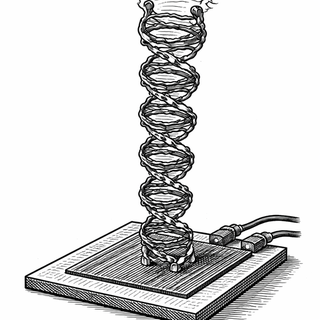
Here is the plain-language version. When the target miR-126 shows up, it binds to a prepared DNA structure on an electrode. That interaction triggers a hybridization chain reaction, which is a fancy term for a self-building DNA assembly process. In this case, it creates a long, ladder-like DNA structure on the electrode surface. Hence the “nanoladder.”
Why build a microscopic ladder? Because that larger DNA structure can grab a lot more of a signal-generating molecule called RuHex. More captured RuHex means a stronger electrochemical readout. It is a bit like turning one small porch light into a whole string of stadium lamps. Same neighborhood, much harder to miss.
This matters because the test achieved a detection limit of 59.0 attomolar, which is an extraordinarily low concentration. The reported linear range was 5 femtomolar to 1 nanomolar, meaning the sensor could measure across a broad span of concentrations. For a field where tiny biological traces can make all the difference, that level of sensitivity is the headline.
Why this is intriguing beyond the engineering
A lot of clever diagnostic technology never gets past the “that is neat” stage. What makes this paper more interesting is that it aims at a practical public health problem: how to find disease earlier without making the path to care more burdensome.
A urine-based test that is rapid and highly sensitive could be especially meaningful in settings where specialty procedures are harder to reach. If future studies confirm the results and the technology can be made affordable, this type of biosensor could help reduce diagnostic delays. That matters for health equity. A good test does not automatically create fair access, but a simpler and less invasive test can remove some of the friction that keeps people from getting diagnosed in time.
And yes, this is where I put on the realistic hat. A better tool is not the same as a solved system. People still need clinics, follow-up care, insurance coverage, transportation, language access, and clinicians who take symptoms seriously. Even the smartest sensor cannot fix a waiting room that behaves like a bottleneck with fluorescent lighting.
How well did it work in this study?
In a clinical sample set that included 15 cancer patients and 10 negative controls, the biosensor detected bladder cancer with 93.3% sensitivity, 100% specificity, and 96.0% accuracy.
Those numbers are promising. Sensitivity tells us how well the test identified true positives, while specificity reflects how well it avoided false positives in the control group. High specificity is especially welcome because false alarms can send patients into unnecessary anxiety, repeat testing, and extra costs. Nobody needs more surprise plot twists in medical care.
Still, the sample size here is small. That is the central limitation. Early studies often look excellent before they meet the messier reality of larger, more diverse populations. We do not yet know how this biosensor will perform across different ages, racial and ethnic groups, stages of disease, coexisting urinary conditions, or real-world specimen variability. Urine, as a biological material, does not always behave like a disciplined employee.
The broader promise for underserved communities
If this line of research develops well, the upside is not just scientific elegance. It is practical reach.
A test that uses urine, works quickly, and can detect very low biomarker levels has the potential to fit into more care settings than invasive procedures alone. That could support earlier workups in community clinics, lower-resource systems, and follow-up care pathways where patients are at risk of being lost between referral steps. It could also help people who are understandably hesitant about invasive testing.
For underserved populations, earlier and easier detection is not a luxury add-on. It is part of whether survival gains are shared fairly or concentrated among people who already have the easiest access to specialty care. Health equity often comes down to logistics wearing a lab coat.
What needs to happen next
Before anyone starts printing “nanoladder saves the day” banners, this technology needs larger clinical validation. Researchers will need to test it in broader populations, compare it against existing diagnostic methods, and examine how it performs in routine practice rather than controlled study conditions. Cost, reproducibility, and scalability will matter as much as raw sensitivity.
But the concept deserves attention. The study shows that smart molecular engineering can turn a difficult-to-detect urine biomarker into a readable signal in less than half an hour. That is the kind of innovation that can move diagnostics toward something more humane: fewer invasive steps, faster answers, and more opportunities to catch disease before it has had too much time to settle in.
For patients waiting on that first answer, that is not a small thing. It is the whole game.
This blog post discusses research findings and should not be taken as medical advice. If you have concerns about bladder cancer or urinary symptoms, please consult a healthcare provider. Research discussed here represents ongoing scientific investigation and clinical validation is still in progress.
All images used in this post are decorative illustrations only and do not represent or reflect the accuracy, reality, or correctness of the referenced research.
Primary Source: Self-Assembled DNA Nanoladder-Based Electrochemical Biosensor for Rapid and Sensitive Detection of Bladder Tumor-Related miRNA in Urine. PubMed Record 42045126. https://pubmed.ncbi.nlm.nih.gov/42045126/